
Absent Friends
Salute once more to JD Twitch


I was just gathering thoughts to do an end of year roundup, when this mix came out of the speakers. Not going to pretend it was spooky or anything - I was streaming from my Mixcloud already, after all - but it was a stark reminder of something that loomed over 2025: the loss of Keith McIvor aka JD Twitch. And I realised this was something that deserves talking about again.
Keith and I crossed paths many times over the years. I wouldn’t say we were close by any means, but as with the late Andrew Weatherall - who, out of anyone, probably had the only comparable position within This Thing Of Ours to his - the interactions were always genial and edifying, he was always generous with his thoughts and time, and as with Weatherall I have ended up with many great and lasting friendships through the networks Keith built.
And the geniality, generosity and community building were part and parcel with everything he did musically and culturally. The mix I linked above is case in point. I was doing the regular ambient / experimental show for Worldwide FM and getting guest mixes in for it - when I reached out to Keith, probably not having spoken for a year or two, not only did he say yes instantly and turn it in quickly, and not only was it (of course) great, but thematically he’d tapped into a musical conversation we’d had years before about how Gong and Hawkwind were an under appreciated parallel to German “Kosmische” music of the 1970s, and how The Orb and The KLF were heirs to that.
After he died, digging up that mix, and remembering the fact that he’d done that - linked whole lineages of past music to individual and very specific conversations - helped set off the line of thought for the tribute I wrote for Disco Pogo. It was important to me to share the voices people who knew him really well, and to talk about the minutiae rather than the big achievements, the DJ technique and all that (though they’re important too!). The text is below. There’s so much more to say about the legacy he has left us, the value it has in these chaotic times, and I feel like there’s subtleties that I missed even to what I did get into it. But it’s a start, right?
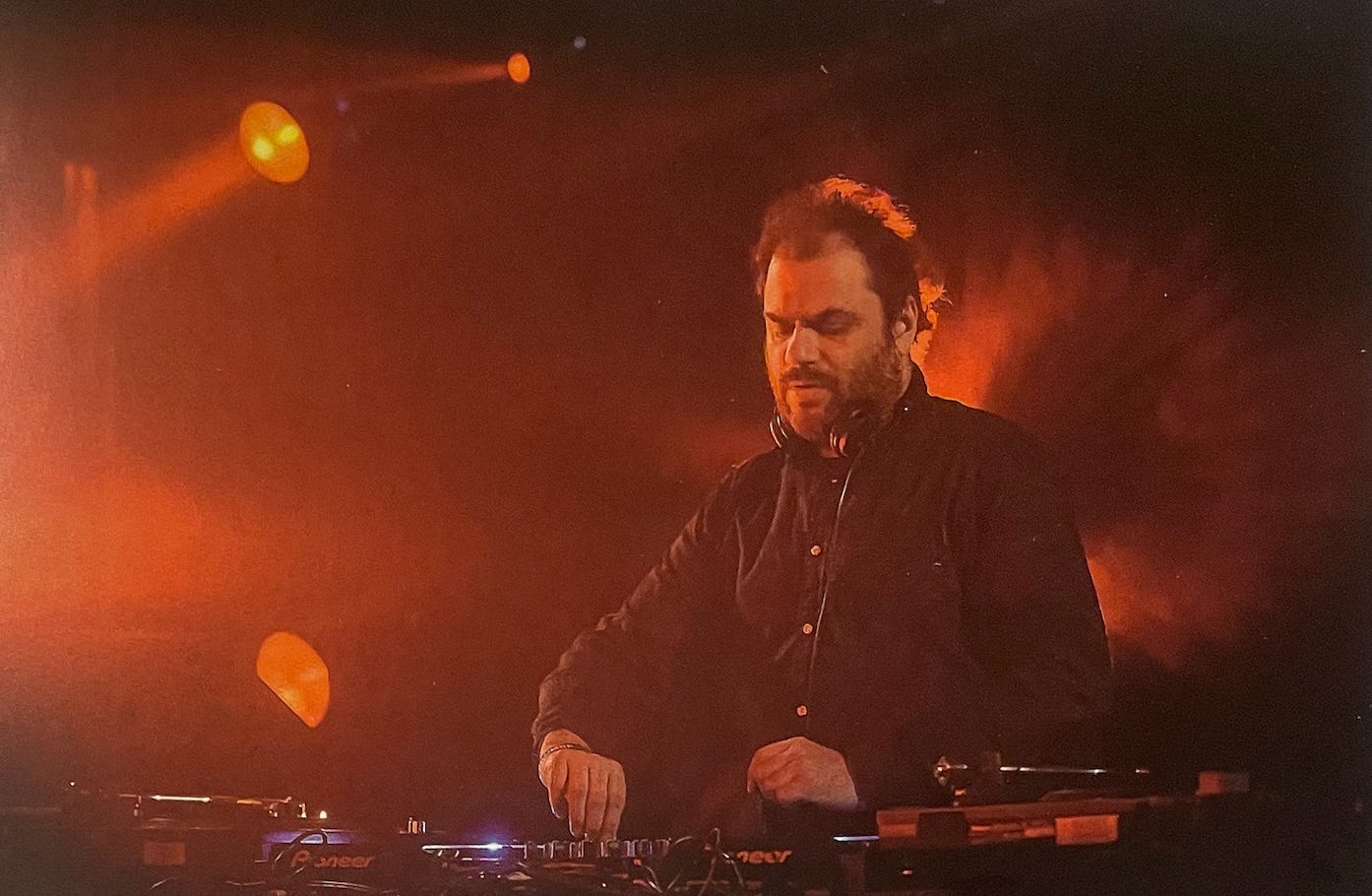
—
Integrity is a word you hear all too little in the music business. Sometimes we just take it as read - it’s the nature of the beast, as you might say, for a world that’s built on intoxication and off-the-clock adventures, breaking out of the everyday and all the rest of it. It’s natural it’s going to contain more than its share of blaggers, wide persons and fly-by-nights, isn’t it? But then, just occasionally, someone makes their presence felt who makes you realise that there is another way.
Keith McIvor always wore his heart on his sleeve when it came to music, politics, organisation, reputation - everything. Calling a sub-label Against Fascism Trax, another one Autonomous Africa - this one raising money for projects across the continent - being a loud voice in support of feminism, LGBTQ+ rights, safety for refugees, community cohesion, and against racism, sectarianism and oppression was always part and parcel of what he did. But there was far, far more to it than that. We know all too well how even campaigning, advocacy and sloganeering can be performative, self-aggrandising, even a vehicle for manipulative scenester jockeying. McIvor was the opposite of that.
For McIvor, politics wasn’t a badge to wear, a team to support, a party whose hierarchy you have to work your way up: it was very simply who he was, in exactly the same way as his clubs, labels, curation, public persona and all the rest were. It’s why the tributes following his death from friends and colleagues in Scotland tell you as much or more as anything from any big name. Just a scan through the replies on any post on socials will give you a taste of this: for every expression of general admiration or memory of a club night, there will also be stories of jokes told, favours done, the small stuff on the most personal level that show that his ethics and generosity functioned there as much as in any big project or statement.
Adrian Burns was a friend for more than 30 years, the “lighting monkey” for Optimo, and McIvor’s driver in the Pure days. He recalls driving himto Dumfries for a Pure gig, where McIvor offered him the warm-up DJ slot “probably out of convenience” but also insisted he joined him for a back-to-back for the last half hour. “He didn’t need to do that but he knew what it would mean to me.” Another longtime friend and Optimo lifer, Clair Crawford
- now a multimedia artist as CLAIR - remembers him being a personal support for her and other friends at difficult times, but one particular memory that leaps out is how they used to play the strategy boardgame Risk. “We’d often have new players join us as guests, and despite his competitiveness, and the complexity of the game, he was amazing at explaining it, reassuring them they’d pick it up after a few rounds, and always went out his way to make them feel very included.”
It might seem like a small, even silly, detail to report, but life is made up of small, silly details, and so is community. And the lasting community that Mc Ivor built was at least as much about the domestic details of his adopted home city Glasgow - of people hanging out, of boardgames and house parties, of Jill Mingo (aka DJ Mingo-Go) ‘s brilliant story of recording Jimi Tenor on the kitchen table of her tenement flat after he and the then all-but-unknown Sähkö/Panasonic crew had played Pure - as it was about any grand event or global scene connection.
Partly that was to do with the Glasgow mentality: tight-knit, hands-on, sceptical of authority, combative and convivial often at the same time. But also it was reflective of the deep immersion in subculture and anarchism that McIvor was already voraciously soaking up with scholarly thoroughness but wild passion before he began DJing in 1987. As is well documented, the sound of Optimo in particular is deeply rooted in the mid-80s interzone between post-punk, industrial, goth and dub that he came up through and where he started Ding in 1987. But McIvor was also taking on board every intellectual and aesthetic manifestation of community and rebellion, from On-U Sound, Crass, Throbbing Gristle and on, and brewing them into his own “pragmatic anarchism”.
Although a lot of his favourite music, from Prince Far-I to Coil, was ostentatiously spiritual or mystical or even religious, McIvor was avowedly focused on the physical world - that pragmatism again - and able to enjoy their power without subscribing to woo. More broadly, he always took the strongest ethical and pro-social messages from whatever subcultural sounds and texts his attention fell on, and found the highest common factors between them too, feeding all this back into everything he created, all contributing to the good vibes but also the basic functionality and durability of the music, parties, mixes, statements, flyers and everything else surrounding Pure, Optimo and the labels.
From putting out techno that sampled Jello Biafra espousing the economic value of marijuana farming as revolutionary praxis on the T&B label to Optimo’s no-queue-jumping-for-the-guestlist rule, from the relentless commitment to supporting local artists and under-represented global ones to the closeness of his friendship and creative partnership with Jonnie Wilkes over 28 years, Keith lived his values. And that’s the true meaning of ‘integrity’: not just having values, but integrating them, into one another, and into everything.
Discussing this, another old friend, Teamy - OG Optimo crew member, now running the Wrong Island Communications label - recalls stumbling on a book called ‘Glasgow Zen’ by the poet Alan Spence who’d moved to Japan. “My favourite,” says Teamy, “is called something like ‘on the interconnectedness of mind, body, and spirit’ and the poem just says: “it’s aw wan tae me, mate”. That, he suggests, is the essence of Keith McIvor: “He just did it, whatever it was, because he just had to. It was all so uncontrived.”
McIvor leaves a vast legacy, not only of his own work, but of careers owed to him, of friendships and ideas forged in his communities. And perhaps most important is that simple way of conducting himself that drove all of that, and the example that gives, that no matter how fucked up our world, cultures and subcultures might get, there genuinely is always another way.
Thank you for this, losing Keith has been so hard and knowing there are people who love him for the human being he was helps a lot xx
What an incredible tribute that really captures how integrity doesn't need to be performative or loud. The bit about the boardgame stuck with me, cuz I've seen this in my own friendships where the mundane, everyday moments end up matering more than any big gesture. That Glasgow approach of weaving ethics into everything without making it a badge feels rarer than it should be these days.