
Little Rooms.
Great Things Start in Little Rooms. That's it.

The other week I was invited to talk at a tech and media gathering called Hacks & Hackers. I was introduced to Joanna who organised it on social media, she said she wanted optimistic takes, I told her a few, she said “go for it”. So I came along and it went a little like this:
—
Hi. I’m Joe and I’m an anarchist. I’ve tried not to be, but I never had a chance.
I was raised Quaker, from birth I was around nice middle class people talking about decision making and action without leaders, lawbreaking for the greater good, turning over the moneylenders tables, eco stuff, EF Schumacher’s Small is Beautiful, all of that. I was a teenager at the peak of rave and I watched the most incongruous mix of people working together to keep the thing together: not in a utopian way – very definitely not – and not even sustainably, but it was real and it left its mark, right? More recently I tried to be grown up and invest in normal ideology, but the modern age has been about great daemonic disruptors – Covid, Trump, AI – that reveal all politics and rule of law to be contingent, movable, “hallucination by consensus” to misuse William Gibson’s phrase.
Most of all, though, it’s my work, every day, that keeps me from being able to think in any top-down way. It’s not that I don’t do mainstream. Early on in my writing, I had some really big breaks, I was doing massive pieces for big titles, I could easily have gone that route. With copywriting and consultancy side hustles over the years I’ve been part of billion dollar fintech projects, development of new social platforms, rebranding huge voluntary sector organisations… but I could never get away from the fact I’d always rather be getting my hands dirty scrabbling around in grassroots culture than trying to climb the greasy pole. My life’s work is the study of subculture, and what subculture IS this century.
And one of the biggest things I’ve come to grasp is how all culture – not just hip things but in sports, politics, hobbies, schools, villages, workplaces, whatever – is transmitted in handshakes, dance moves, stances, smells, flickers of expression, micro variations in voice on a slang word or joke or anecdote. Even with online culture, micro details in a subgroup’s visual and verbal tics and flourishes and memes are rooted in all that, in the feel of the phones they own, the rooms their parents put their first computer in, the bus seats they sat in, the smells of modern life… IYKYK, right?
And this physicality CANNOT be assimilated, bought, sold, and it’s incredibly difficult to erase. Maybe the ultimate historical example is how West African cultures were maintained through the horrors of transatlantic slavery in tapped out rhythms, vocal tones, work songs, hymns, and still abide. One of the biggest hits of this year, a song which has reached billions, is Bad Bunny’s “DtMF”, which very consciously, very cleverly starts as familiar synthetic-sounding reggaetón but gradually strips away to reveal this complex, inimitable Afro-Latin percussion and melodies that have been passed down literally hand to hand over centuries.
And of course AI cannot grasp or assimilate this. Its training set doesn’t – CAN’T – include these sense memories, the feeling of something, the sense of your mouth around a word (try getting them to make a pun! seriously!). And they can never fill in gaps, only smooth them over. They can help map out, but they can never add to the texture, the grit, the murk, the haze, the contour, the mistakes, the ironies, the absurdities, the KNOWLEDGE of history or the cultural present.
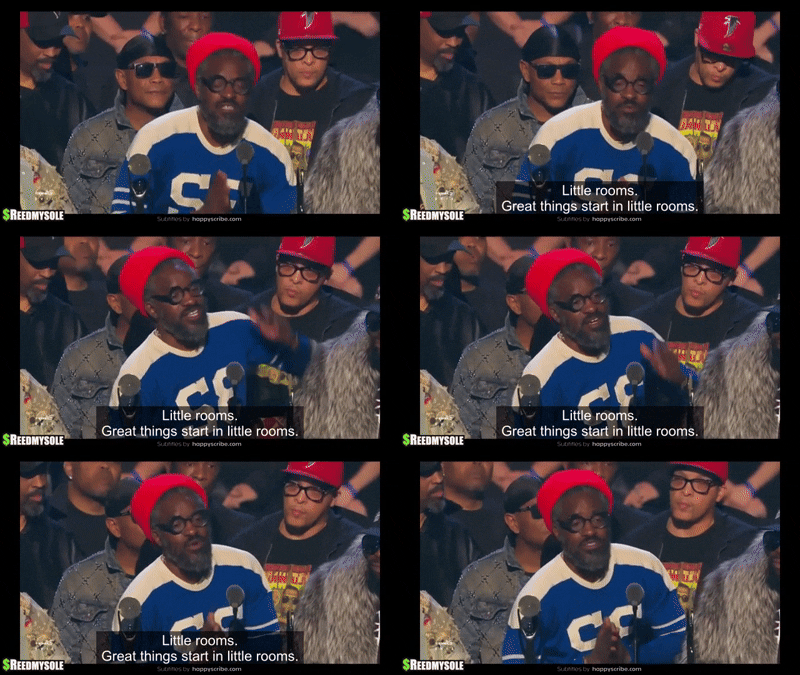
Last week on Instagram, I saw Andre 3000 being inducted into the Rock’n’Roll Hall of Fame, saying “we started in a little room… great things start in little rooms – that’s it!” That is IT. I keep seeing trend spotters and cultural forecasters who live in London, Berlin, Seoul, Dubai, LA, talking about cultural stasis and flattening out – just like they did in the early 2000s when I started out writing – but they are not looking in little rooms. Little uncool rooms. Little uncool rooms in ordinary places like the conservative market town where I live that AI crawlers and ideological blocs and marketing surveys can’t see into, where people break bread together, and DO THINGS, and plant the seeds of life beyond stasis and sloppification and social media silos and loneliness epidemics and the rest.
There are plenty of people who get it, who get that if change is to be made it will be made by people gathering IN ROOMS. The politics analyst Stephen K Bush has half-jokingly suggested an all-inclusive political party whose manifesto is “Go Outside!” The journalist Emma Warren’s mapping out of DIY spaces, dancehalls and youthclubs is a consistent tonic. I keep coming back to the academic Paul Gilroy’s conception of “conviviality” as method of opening up barriers. The grime impresario and agitator Elijah’s “CLOSE THE APP, MAKE THE THING” poster is displayed prominently on the wall of my little room where I work. The sci-fi author and tech commentator Naomi Alderman talks about how the human qualities of discernment, research skill, taste and imagination will remain real and vital, and that applies on the ground, in those little rooms, as much as in any corporation or agency or institution.
And I keep coming back, too, to the hard left wing commentator Owen Hatherley looking at food halls and breweries in Preston and deciding that what he calls “craft beer social democracy” - which requires involvement from state and market and people across backgrounds and ideologies - is transformative, hopeful, real. This is where I operate too. From radical cooperatives to village food fairs, craft clubs, art groups – I’m in the little rooms where things happen without any aim of being the next trend, the next Boiler Room, the next Brewdog, whatever. And you need to 1) support this, indiscriminately, throw money at facilitating and celebrating ordinary activity, not because it’s art, or it’s productive, but for its own sake, and 2) survey it, to see what emerges, sure, but even more importantly to have a constant feed of variety, abundance, grit, reality back into the wider culture.
—
There followed a concluding “pitch” bit where I bigged myself and my work up some more but I’ll save you from that…
—
Postscript: this stuff is definitely a loud signal in 2025. The New York subway is a little room, right? https://www.curbed.com/article/sam-lipsyte-how-to-make-sense-of-2025.html
—
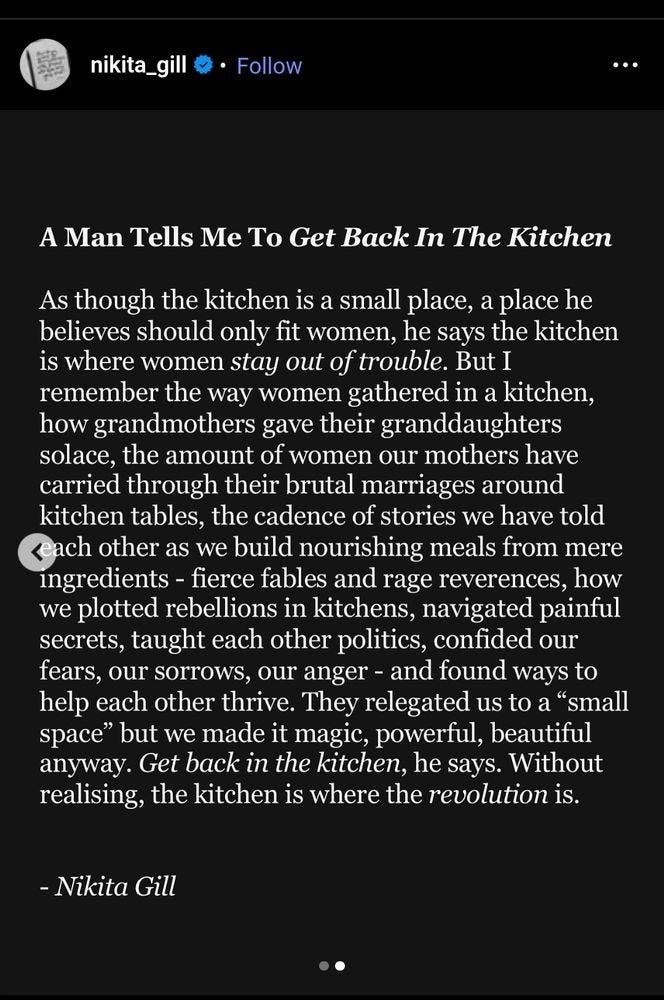
Post postscript: I didn’t have time to fit it in but I saw this poem the other week.
This is great - reminds me of RepHresh in 1997 at the Soundshaft.
Genuinely needed to hear this to be honest. Thanks Joe