
The 100,000 Person Problem
...and the eight friends solution.

So since I published the Little Rooms… (you know what, I was going to say “piece” or “blog” or “talk” but actually yes – it’s a manifesto) …MANIFESTO, my feet have hardly touched the ground. It’s really resonated hard with a lot of people. The conversations it’s provoked have been extraordinary, everywhere I go, and a lot have already led on to real world moves, including a wild performance of a remixed version of the talk with the electronic music and tech legend Tim Exile in his stunning new audiovisual loft space in Hackney to an audience containing a lot of people I am to one degree or another in awe of – and then just last weekend, four days of unhinged but glorious talks, dances, exhibitions, lectures and on the ground fact finding all on an absolute shoestring in the little rooms of Cardiff and Bristol crackling with all the defiant grassroots party energy that runs through the very foundations of those cities.
Frankly I’m still reeling from that, and not sure I can remember it all let alone relate it, but I’ll try here. But before that, there’s one other crucial thing that emerged as I expanded on the Little Rooms thesis for the performance version. The original version, two before the performance, was half written, half improvised for a (little!) room full of people with stewardship over vast, vast information flows (and a lot of money).
They had senior jobs in Bloomberg, Meta, BBC World, Google, there were people who’d been at Twitter before… y’know. That kind of thing. Smart people! But there was one thing that kind of came into relief as I listened to their talks and chatted to them after: there was a lower limit to the scale they were capable of thinking on. As they discussed audiences, algorithms, technological shifts, all that, it felt like any unit of less than maybe 100,000 people was meaningless to them.
Obviously for some it might be 50k, for some 250k, but the point is, all of these numbers were TINY to them. That was their level of granularity. That was – a phrase that has been ringing around my head more and more ever since – the size of the holes in their sieve. And as I talked to people in Hackney, Cardiff and Bristol that exact phrase, “the holes in their sieve” was one that got instant recognition from anyone who’d ever dealt with arts funding, big institutions, and especially big brands.
This isn’t an abstract problem. It affects who gets funded, what gets covered, how technology is designed, which culture survives. And it’s getting worse as institutions rely more on algorithmic systems that can only see what’s already visible. The 100,000-Person Problem needed a name because it needs solving.
And I understood it viscerally, because at all these events, I was really feeling the depth and breadth of living culture, and it felt like I was meeting so, so many people – but of course the number I interacted with was in the hundreds, the number I spoke directly to in the dozens, the crew I’d organised my Cardiff / Bristol trip with totalling EIGHT friends and family. Realising the vastness of the chasm between these spontaneous constellations of people and the number that have to be doing the same thing to be even visible to big institutions was vertigo-inducing.
Only when the topic came up though. Most of the time, the buzz of the people in the little rooms was everything. And still is, days later. So, look, structural analysis can wait – I’m going to rattle through my whistle-stop tours, because what matters that the initial proof-of-concept of the Little Rooms Initiative can be stamped with PROVED. Putting my money (deliberately not very much) where my mouth is and my boots (Air Force Ones) on the ground proved to me that what I’d said / written in that first manifesto wasn’t just abstractions pulled out of my arse, it was the realness.
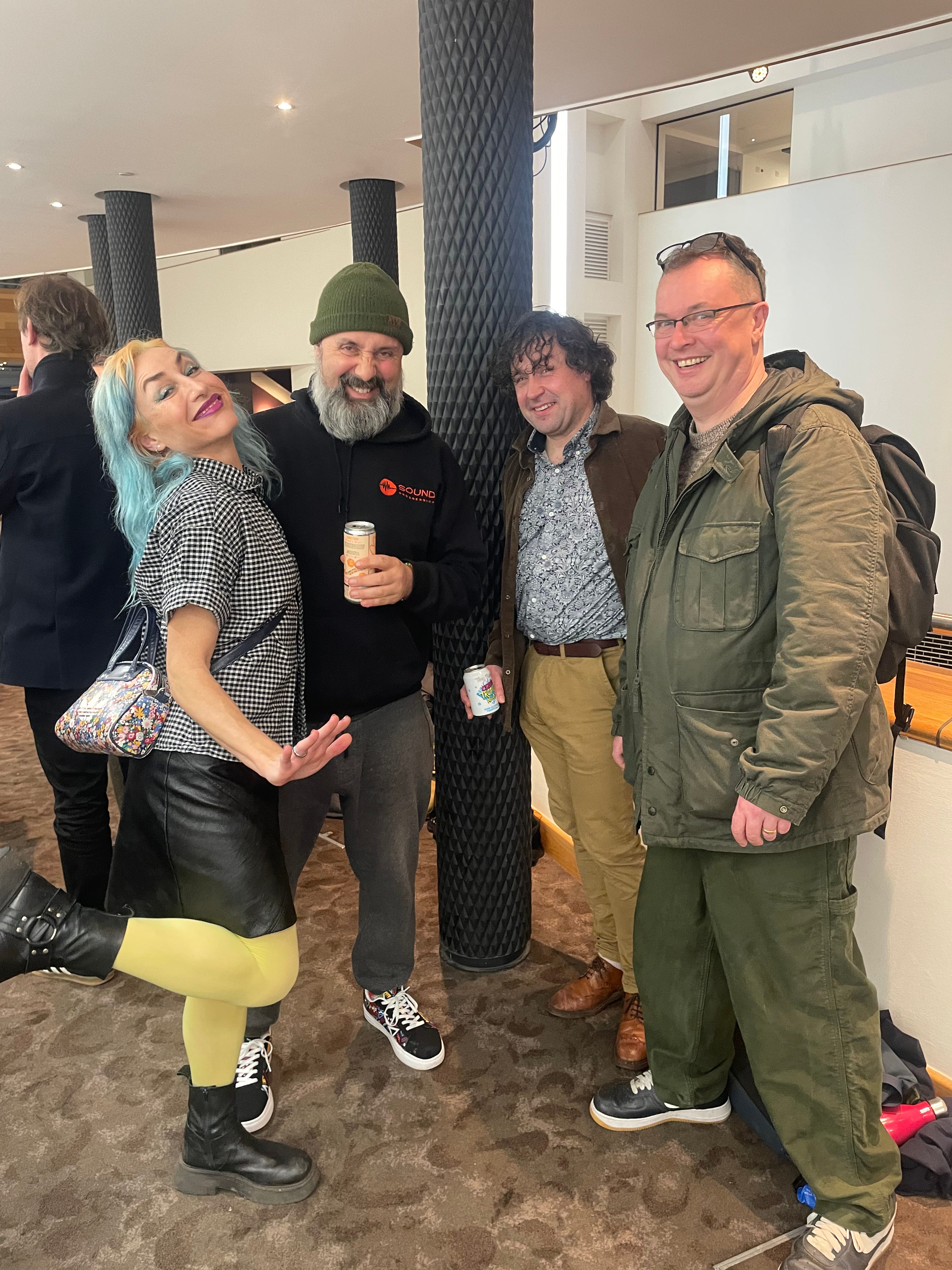
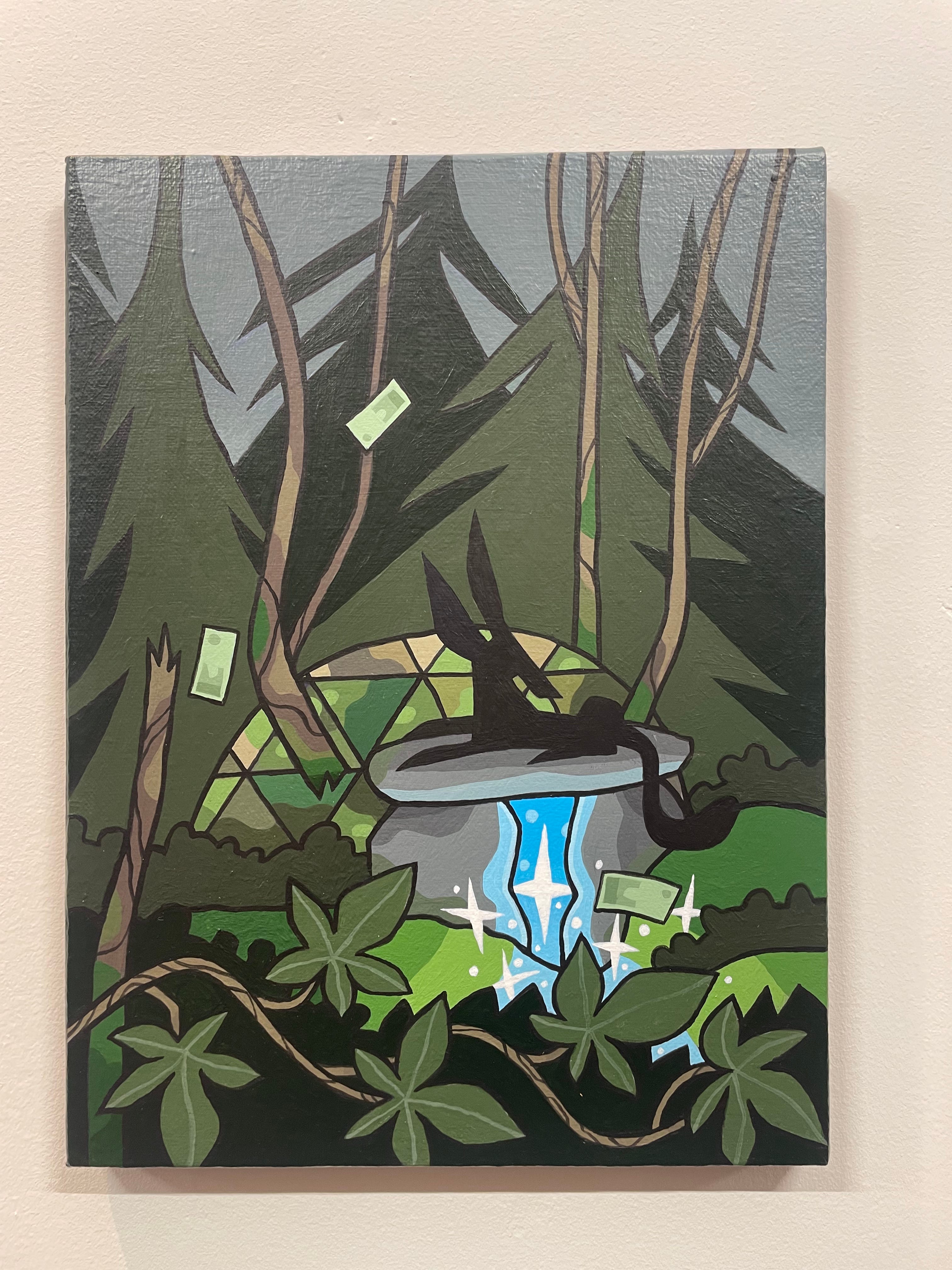
Soooooo…. Cardiff went like this: arrived late Thursday night, walked to my cousin J-Ro’s from the station in the rain, within five minutes had to push through a group of lads one of whom was singing “I’m Cardiff born I’m Cardiff bred, and when I die I’ll be Cardiff dead” in fine baritone, crashed early. Friday, had day job work to clear in the morning, ambled round the city trying to get some headspace in preparation for everything; checked in at Diggers Club Records which is on the second floor of an old bank building in Cardiff Bay so you have to ring a bell and be given instructions to get in, strong John Le Carré vibes, met Luke the guvnor, a former mental health nurse who’d built his vinyl dealership from nothing via an appointment-only spot in a lockup (hence the name) to this gorgeous and welcoming chipboard-furnished room where the city’s afficionados – including a lot of youth – come to buy jazz, house and jungle (he’d also managed to become the UK distributor for an incredible Japanese jazz reissue label into the bargain); strolled two minutes to the Wales Millennium Centre to meet up with my co-conspirators on the ground J-Ro, Reb and Kaptin for the opening of the CYNEFN exhibition of Welsh artists curated by Matthew Evans aka Mavs aka SnowSkull where there was free drink (thankfully I didn’t dip into this enough to spend £400 I don’t have on a beautiful dream of a Pete Fowler original); on to the city centre and a stride through torrential (as in, the pavements became literal torrents) rain to the covered market where a load of food stalls were open, the entire vaulted structure was lit up with disco lights and we had A1 Keralan food, cider and danced to truly great DJs put on by the Radio SUDD community station; back to my cousin’s, thought I’d managed to be sensible, but then he opened the whisky – what can you do?
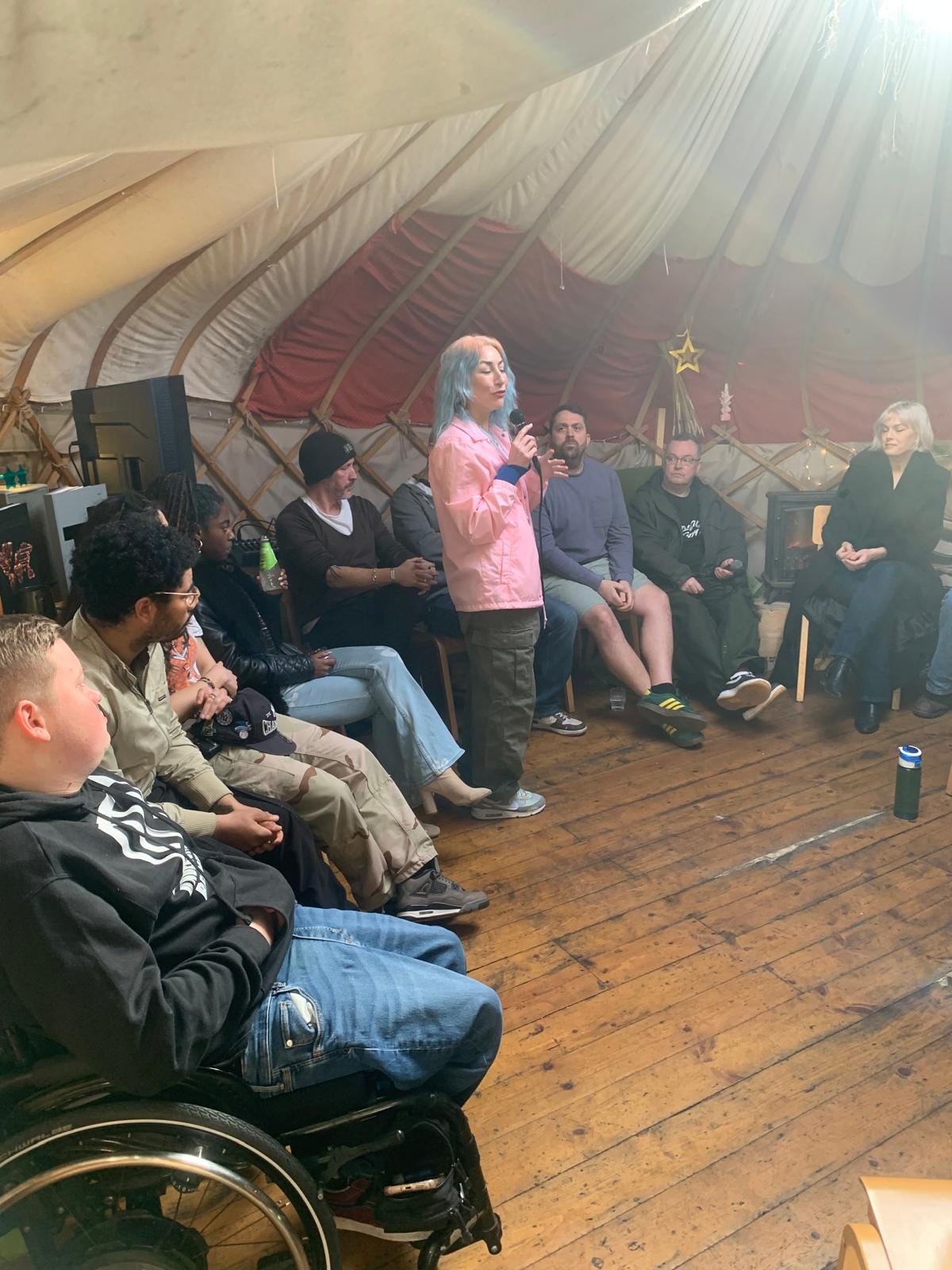
Saturday, a walk in the gorgeous industrial surrounds of Splott Beach to watch the fishermen and blow away the cobwebs; on to set up our discussion in the yurt in the back yard of Cardiff’s only audiophile venue Paradise Garden; talk exceeded all expectations, with (deep breath) Luke from Diggers Club, local film and TV industry mover and shaker Makeba Nicholls, Greek/Welsh vogueing/ballroom artist/DJ/performer Raven, DJ/producer and disability activist Finley Allen, young graffiti writing sensation La Niebla from the Ladies of Rage and Resting Bitch Face collectives, still very much active Cardiff hip hop veteran DJ Jaffa, local and global star Gwenno, Christian from the Spit & Sawdust warehouse skate park and café on the edge of town, plus Reb and Kaptin and people with involvement in the indie, metal and live electronica scenes altogether giving us at least three generations of culture participants in the conversation all reporting really similar victories and challenges from really different angles; quick ramen stop then on to the Grange Pub where Reb already had our pub rave CINDERS (finishes at midnight, see?) just about set up, and from 7pm on Trishna Singh Davies (who had already torn it up the previous night at the Night Market in a Welsh bonnet, warming us up with the slickest mixing joining dots between rap, dancehall, soca, soul and more obscure forms), Reb (right round the houses of global party music peaking with an Arabic Jersey club banger), Raven (all the sass and strut of ballroom but blended in with everything from Afrobeat to an early-on deep dark techno brain-cleanser), me (token cishet white man playing H O U S E) and Finley Allen (by a long way the absolute best Detroit techno / electro set I have seen or heard at least since Houghton last year, and when I ran over to ask him what one particularly stand-out tune was it turned out to be his own work) turned our little room into a P A R T Y, complete with hunt the glass slippers game; that we were also dancing and drinking and talking through the night with an Iranian friend on that day of all days added to the surreality of it, but also to the sense that doing this foolishness still matters no matter what.
Sunday, I thought my train ride to Bristol would be a decompression break, but as if to prove that once you’re tapped into subculture you can’t tap out, I found myself sitting next to a bunch of folk talking about scene politics and DIY venues, couldn’t help butting in, ended up talking the whole way there and it turned out they were Cardiff’s queer climbing club, called…. wait for it…. BE GAY, DO CLIMBS – which I am still now chuckling delightedly about each time I remember it; my friend Rich aka Tudor Acid met me at Temple Meads, found our way to Basement Beer, set up the even there with Charlie Stoic (who’d barely slept from his own Terrain rave the night before) and Garry Spacepope of Insieme Festival who was providing the soundsystem and helping with promo; Charlie interviewed me about some favourite tracks of my life “Over a Pint” (the name they’d picked for this session) to a little crowd of locals, families (including kids who went absolutely spare tearing around the place when I played Gong “Master Builder”) and, wonderfully, an incredibly dapper older couple who, when we had a short break, ran over to say they were just on on a weekend break from Belfast, had been passing, heard good music, strolled in, enjoyed our chat, then realised “oh my god it’s Joe Muggs!” (yes my head swelled dangerously at that) and saw this as proof of the value of flaneur-ing, then we played some amazing tunes, turned the afternoon into a dance party as it went into evening with Reb and Raven having come over the bridge to add to the dancefloor energy, finished at 7, I had a couple of pints in the smoky back garden of The Bell round the corner and caught up on Bristol gossip with some old friends, then left to walk – via a 45 minute diversion that was so truly, intensely, impossibly weird and unbelievable that the story will never, ever go online back to Rich’s and collapse, reeling.
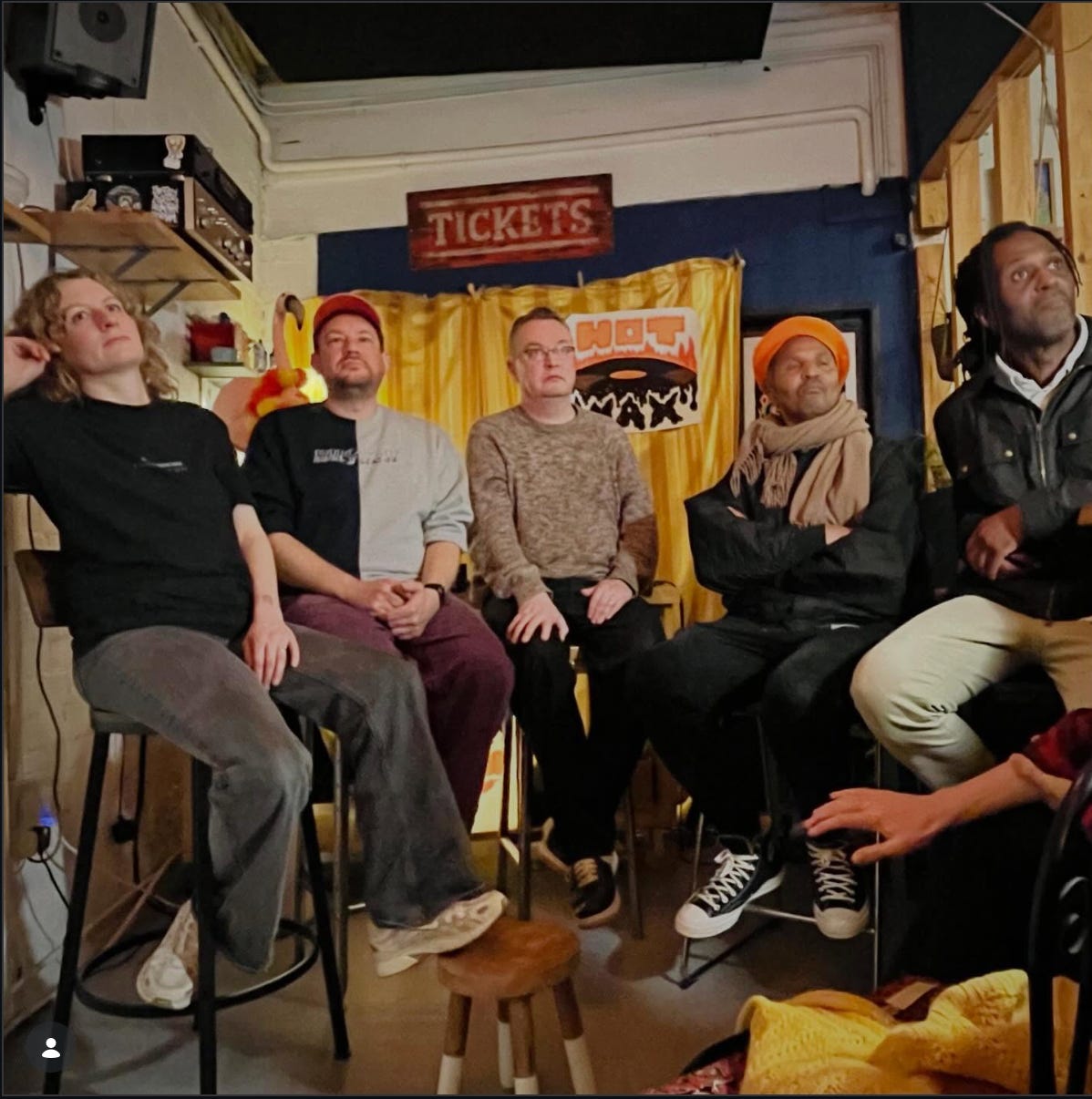
Monday, back up to Stokes Croft, spent the morning in a community cafe writing up my memories and notes for the day’s activities, marvelled at the abundance of life and oddness, on to do my lecture at BIMM with my old friend Cliff Jones, did a talk about the place of commentary and narrative in the era of information overwhelm and gave his music journalism and marketing students (some of whom I was seeing for the second year running) commentary on their planned projects, totally inspired by the fact that there are still youngsters bloody minded enough to believe that their voices will matter; walked north – en route bumping into dubstep legends and the manager of Bristol’s amazing Mickey Zoggs / Noods Radio community hub for brief diversionary chats about the scene – to my final stop, Hot Wax Records which it turns out is part of an amazing building full of creative studios and small businesses coordinated by Pat who also runs the dreamlike mobile Once In A Blue Moon Cafe where I’ve done my 1-4am ambient magic sets for We Out Here festival the last three years; tested camera angles, arranged the space, welcomed people in, met loads I’ve only spoken to on socials, our panelists arrived, talked with Lizzy Ellis (Tectonic records, Saffron programme), Charlie Stoic (again), jungle legends and brothers DJ Krust and Flynn (in their capacity as archivists of the ongoing Bristol Jungle 30 years project) and Hot Wax founder Nathan Worm about what the purpose of media within underground or underrepresented culture is and what media even means; by this time my voice was going from talking solidly for four days, the panel had a lot of opinions, the crowd were very keen to participate, and I was barely able to muster my chairing skills to keep it all in check, but the sense of barely controlled anarchy felt very Bristol and like a perfect rounding-off of my weekend; once again there were people aged 20s to 70s all throwing their angles in, the conversation went on two hours plus then spilled out into the street afterwards; finally Nathan and I closed up, had one last beer with local stalwart John Stapleton and listened to his tales of Nellee Hooper sabotaging his crew’s decks back in the 80s Bristol soundsystem days, and of having seen Patti Smith live twice with a 50 year gap; into an Uber back to Rich’s, sat up discussing leftfield electronica scene politics; bed; up to write 1400 words on Alice Coltrane on the train home then strip down our living room ready for redecorating and help agitated offspring through a school wobble… not that you need to know that, but its kind of why my feet STILL haven’t properly touched the ground yet.
SO: just had to info-dump that really, just to depressurise and start to try and get some shape to it. There’ll be individual reports on each part, with footage, DJ set recordings etc. I will give PROPER thanks and links to the work of all those involved. So many heroes. And I still need to unpack the session with Tim Exile too, but let’s just put it this way: the first person to run up to me and say they’d enjoyed the Little Rooms talk that time was, it turned out, Tony Nwachukwu whose CDR (Create.Define.Release) events have been an inspiration to little rooms thinking for years and who I’ve been a fan of since his Attica Blues days three decades back.
BUT: the point is here that the Little Rooms Initiative makes sense. This stuff can only be understood through experience in those little rooms. And really making the connections to those little rooms has to come through even littler groups. The fact that all of the above came about entirely via my friendships with Reb, Kaptin, J-Ro, Charlie, Gary Spacepope, Rich, Cliff and Nathan was crucial to how it unfolded and how I met the others and understood their networks and their networks’ networks and so on. And all that on a micro budget, finding spaces for free, crashing on couches, making backdrops from acid smiley Asda shower curtains, props from dolls’ shoes and all the rest.
AND: the sense of mission is only intensified. To come full circle, The 100,000 Person Problem was front and centre in my mind and in all our discussions through this. As I said, so many people recognised the feeling of falling through the holes in the sieves. Some people do want their endeavours to become bigger, others are happy continually staying small and communal, but very very few want to be simply invisible.
A lot came out of my fact-finding and out of all these conversations, but an overwhelming sense was that this kind of documenting, and how we communicate what we’re documenting, matters more than ever in this time when corporations’ vision can’t even SEE this far down, when decisions are made based on the whims of LLMs whose datasets are all from the virtual world and whose webcrawlers have never been and can never been in these little rooms (and no, Meta Ray-Ban Pervert Goggles won’t achieve that either). This isn’t just about reaching Google and Bloomberg, but about reaching and bridging the gap for those people whose sense of the world’s contours are formed by those corporations (i.e. most people).
So what comes next? I’m developing this into something more systematic – methodologies for documenting culture at this scale, frameworks for advocacy, maybe even infrastructure. The problems of information crisis and institutional scale and agency are recognised, sure, but most responses treat “grassroots” as something to extract from or scale up - or if not then to fund almost out of pity, to literally look down on. What if instead we built systems that work AT this scale – funding, documentation, networks that honour the little rooms rather than trying to turn them into big ones?
And whether you’re a funder trying to support small-scale work, a platform trying to understand community dynamics, an artist or organiser trying to survive the gap, or just someone who believes great things start in little rooms – let’s talk. I’m figuring this out in real time, but the proof of concept IS proved. Great things DO start in little rooms. Great things DID start in last weekend’s little rooms.
Thanks everyone… onwards.
Get in touch: joe.muggs@gmail.com / instagram.com/joemuggs / joemuggs.bsky.social etc etc